LBOTE: Understanding Language Background Other Than English in Australian Schools
What the LBOTE percentage means on a school profile, how it reflects local community makeup, and why it matters for cultural context.
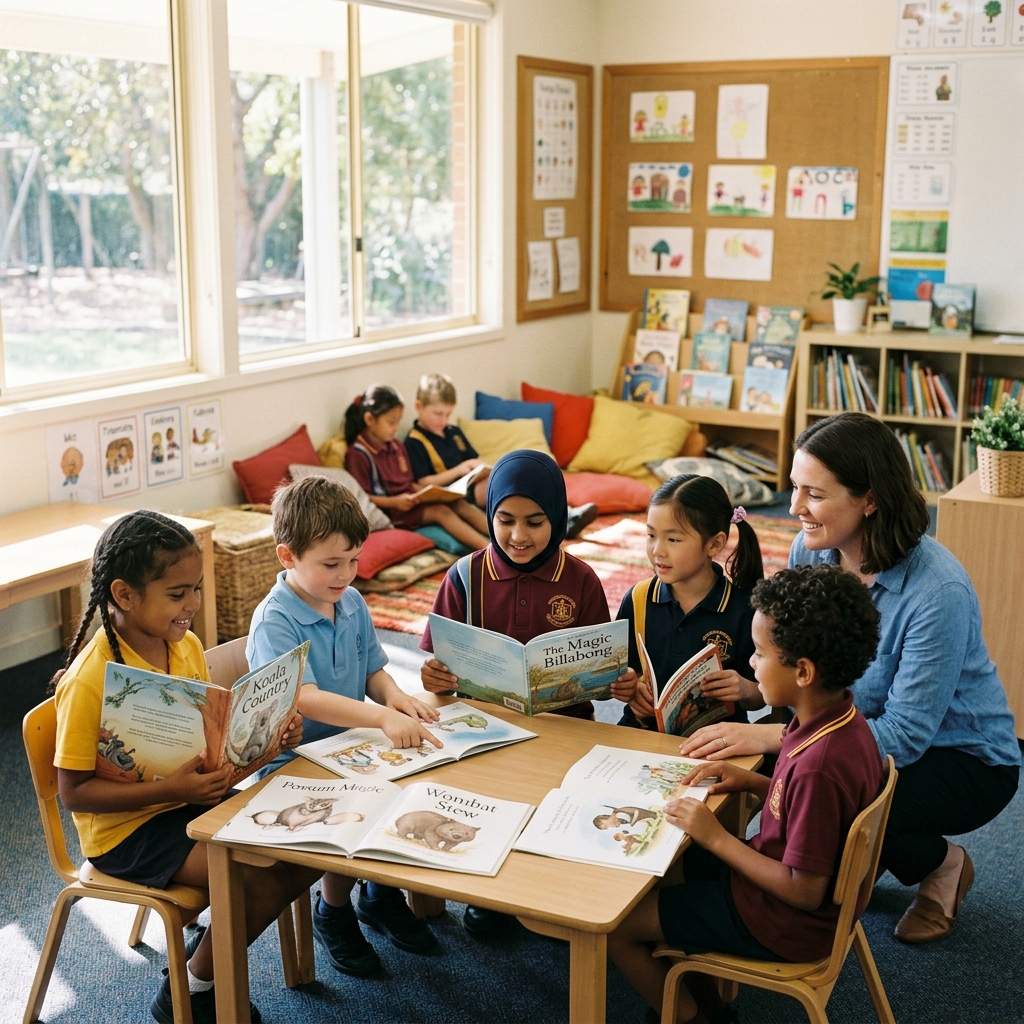
My daughter came home from her first week at a new school — one with an LBOTE percentage over 70% — and announced that she'd learned how to say "welcome" in four different languages. She thought this was completely normal. I thought it was extraordinary.
LBOTE — Language Background Other Than English — describes students who speak a language other than English at home, either primarily or alongside English. As a data point on a school profile, it tells you about the linguistic diversity of a school's community. As a lived experience, it describes something much more interesting.
What the LBOTE figure actually tells you
A school's LBOTE percentage is a single figure that collapses enormous cultural complexity into one number. A school with 65% LBOTE might have students who speak Mandarin, Arabic, Vietnamese, Tagalog, Telugu, and Somali. A school with 40% LBOTE in a different suburb might be almost entirely one heritage community. The number, on its own, tells you almost nothing about the specific cultural mix — only that a significant proportion of students have a home language other than English.
What it does reliably indicate is that the school is operating in a culturally diverse environment. This has real implications for how it teaches, what support systems it has in place, and what kind of social environment you are sending your child into.
LBOTE is not a proxy for disadvantage
This conflation drives me slightly mad. High LBOTE schools in wealthy Sydney suburbs — Chatswood, Strathfield, Hurstville — serve communities of Chinese and Korean heritage with ICSEA scores well above the national average. These are not disadvantaged schools. They are schools where most students have a home language other than English and where academic expectations from families are often extremely high.
Equally, there are high-LBOTE schools in genuinely disadvantaged communities — refugee and recent migrant populations in outer-suburban areas — where the linguistic diversity reflects both cultural richness and significant material hardship. The LBOTE figure cannot tell you which story applies. You need ICSEA, SEIFA, and ideally some time talking to the school community itself.
EAL/D support: what to look for
Schools with significant LBOTE populations — typically defined as 20% or more — typically employ EAL/D teachers: specialists in English as an Additional Language or Dialect. These staff support students who are at various stages of English language acquisition, from very recent beginners to students who are fluent in English but whose home language creates specific academic literacy challenges.
When visiting a high-LBOTE school, it's worth asking:
- How many EAL/D-qualified teachers does the school have?
- How are students' English proficiency levels assessed when they enrol?
- How are EAL/D students integrated into mainstream classes — and is there a pathway as their English develops?
The quality of EAL/D provision varies significantly between schools, and it's not always visible from the outside. A school with 80% LBOTE and a superb EAL/D program will do far better for its students than one with the same profile and minimal English support.
The cultural richness argument
I want to be direct about something that often gets left out of these clinical descriptions: the social and cognitive benefits of growing up in a culturally diverse school community are real and documented. Students in diverse classrooms develop greater cultural competence, broader social skills, and — according to some research — stronger critical thinking skills, because encountering different worldviews requires you to examine your own assumptions.
None of this means a lower-LBOTE school is worse. But for English-speaking families who are weighing up a high-LBOTE school against a more homogeneous one, the cultural diversity is not a neutral feature to be clicked past on a data table. It is, in my view, a genuine educational asset.
My daughter, for what it's worth, can now say "thank you" in six languages. She's nine.