Government, Catholic, or Independent: Which Sector is Right for Your Family?
The real differences between the three school sectors in Australia — governance, fees, ethos, curriculum, and academic outcomes.
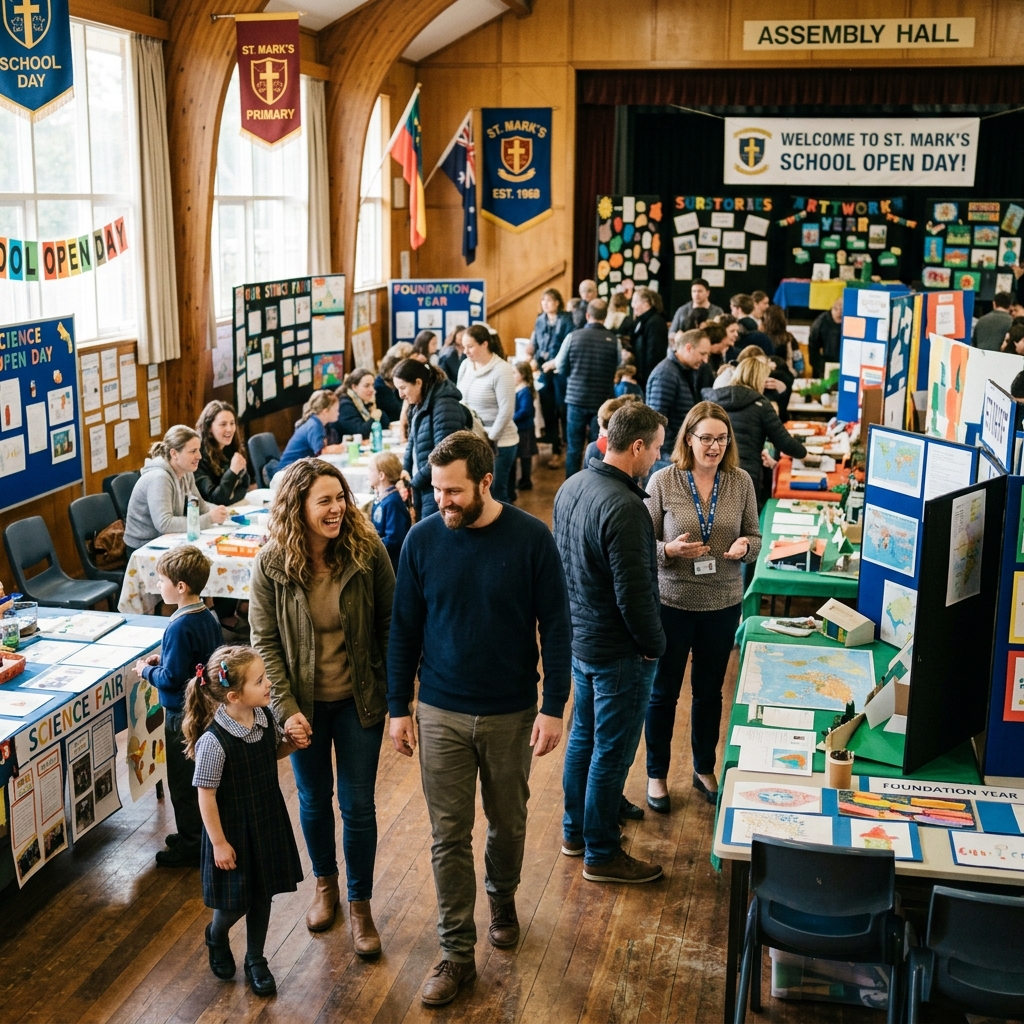
When the Jensen family sat down to decide where their twins would start high school, the list of options felt almost comically long. There was the local government comprehensive, three suburbs over. There was St Brigid's, the Catholic systemic school where one of the twins had been at primary. And there was Lakeside Grammar, the independent school with the spectacular waterfront campus and the $28,000-per-year fees.
"We kept going around in circles," says their mother, Clare. "Everyone we spoke to had a very strong opinion, and almost nobody's opinion was the same as anyone else's."
The question of which school sector to choose sits at the intersection of values, finances, community, and educational evidence — and it resists easy answers. Here is an honest assessment of what the three Australian sectors offer, what the evidence shows, and what the research can't tell you.
Government schools: the backbone of Australian education
Government schools — also called public or state schools depending on which state you're in — educate approximately 65% of Australian students. They are funded primarily by state and territory governments, with substantial Commonwealth contributions, and they must enrol all students in their local catchment area without applying selective criteria.
The quality of government schools varies enormously by location. A government school in a high-ICSEA suburb of inner Sydney or Melbourne may have extraordinary facilities, deeply experienced staff, and a student community of enormous academic motivation. A government school in a disadvantaged outer-suburban or regional area may be dealing with staffing shortages, high student mobility, and complex community challenges.
This means "government school" is not a single proposition — it describes a vast range of institutions. What it reliably guarantees is free enrolment (though voluntary contributions are common), local community connection, and diverse student cohorts that often reflect the real world more accurately than selective private environments.
Research from ACER and the Grattan Institute consistently finds that high-quality government schools, properly staffed and led, produce academic outcomes equivalent to private schools serving similar communities. The sector does not, in itself, predict outcome quality.
Catholic schools: the middle ground with a mission
Australia's Catholic school sector — the world's third-largest Catholic education system — educates approximately 20% of students. Operated under diocesan governance or by religious orders, Catholic schools occupy a distinctive middle position: more affordable than most independent schools, more values-explicit than government schools, and more geographically widespread than either.
Catholic systemic schools (the majority) sit within a diocesan fee structure, meaning fees are set collectively rather than individually. This creates a degree of affordability compared to elite independent schools — annual fees at Catholic systemics typically range from $2,000 to $8,000, compared to $15,000–$40,000+ at elite independent schools.
What the evidence shows: once you control for ICSEA, Catholic schools do not produce systematically different academic outcomes from government or independent schools. What they do offer is a consistent values framework, a strong sense of community (often drawing from linked parish primary schools through to secondary), and a Religious Education component that some families find deeply meaningful and others find irrelevant.
The key question for families is not "Are Catholic schools academically better?" — the evidence says no, on a like-for-like basis — but "Does the Catholic values environment align with what we want for our children?"
Independent schools: diversity hiding behind a label
The "independent" sector is the most misleading of the three category labels, because it encompasses schools so different as to be almost incomparable. An elite GPS school charging $40,000 per year per student and a small Steiner school with 80 students and $4,000 annual fees are both "independent schools" in ACARA's classification.
What independent schools share is governance: they set their own fees, make their own staffing decisions, and have greater flexibility in curriculum delivery than government or Catholic systemic schools. Many are faith-based (Anglican, Jewish, Islamic, Buddhist, and numerous other traditions). Some are non-denominational. Some specialise (arts, music, STEM, outdoor education).
The highest-fee independent schools — concentrated in Sydney and Melbourne — offer facilities that government schools cannot match: multiple sports fields, dedicated music and drama centres, comprehensive boarding programs, and extensive co-curricular offerings. Whether these amenities translate into better academic outcomes is, as with all sector comparisons, largely a function of the community being served, not the sector per se.
Does sector predict academic outcomes?
This is the question most parents are really asking — and the answer, backed by the most rigorous research available, is: not much, once you account for community context.
Raw national NAPLAN averages do show independent schools outperforming Catholic, which outperforms government. But these averages reflect the dramatically different ICSEA profiles of students in each sector. Independent schools nationally serve a far more advantaged community than government schools do — and community advantage is the single strongest predictor of NAPLAN performance.
When ACER and Grattan researchers have compared like-for-like — schools with similar ICSEA scores, similar student populations — the sector gaps in NAPLAN results shrink substantially. Some high-quality government schools in advantaged areas outperform expensive independent schools serving similar communities.
None of this means sector doesn't matter. It determines the fee structure, the values environment, the physical resources, the admissions process, and the cultural climate your child will inhabit for six or more years. These are genuinely important factors. But they are about fit and values, not a reliably predictable academic advantage.
The financial calculus
For many Australian families, the independent school question is ultimately a financial one. The Grattan Institute estimated in 2022 that the average independent school student costs their family approximately $250,000 over a 13-year schooling career — a figure that rises to $500,000+ at elite GPS schools.
Against this cost, the honest question is: what is the educational return on that investment, compared with the alternative? In many cases, the answer is: less than parents assume. The strongest predictor of a child's educational outcomes is the home environment — the quality of parental engagement, the books in the house, the conversations at the dinner table — not which sector of school they attend.
What the Jensen twins chose
Clare Jensen, after three months of conversations, school visits, and spreadsheets, enrolled one twin at St Brigid's and the other — at the twins' own request — at the government school. "They wanted different things," she says. "And I realised that the fact that they knew what they wanted, and could articulate it, was more important than any ranking I was going to find online."