Selective High Schools in NSW: Tests, Ranking, and What Success Actually Means
How selective entry works in New South Wales, what the placement test measures, and whether a selective school is right for your child.
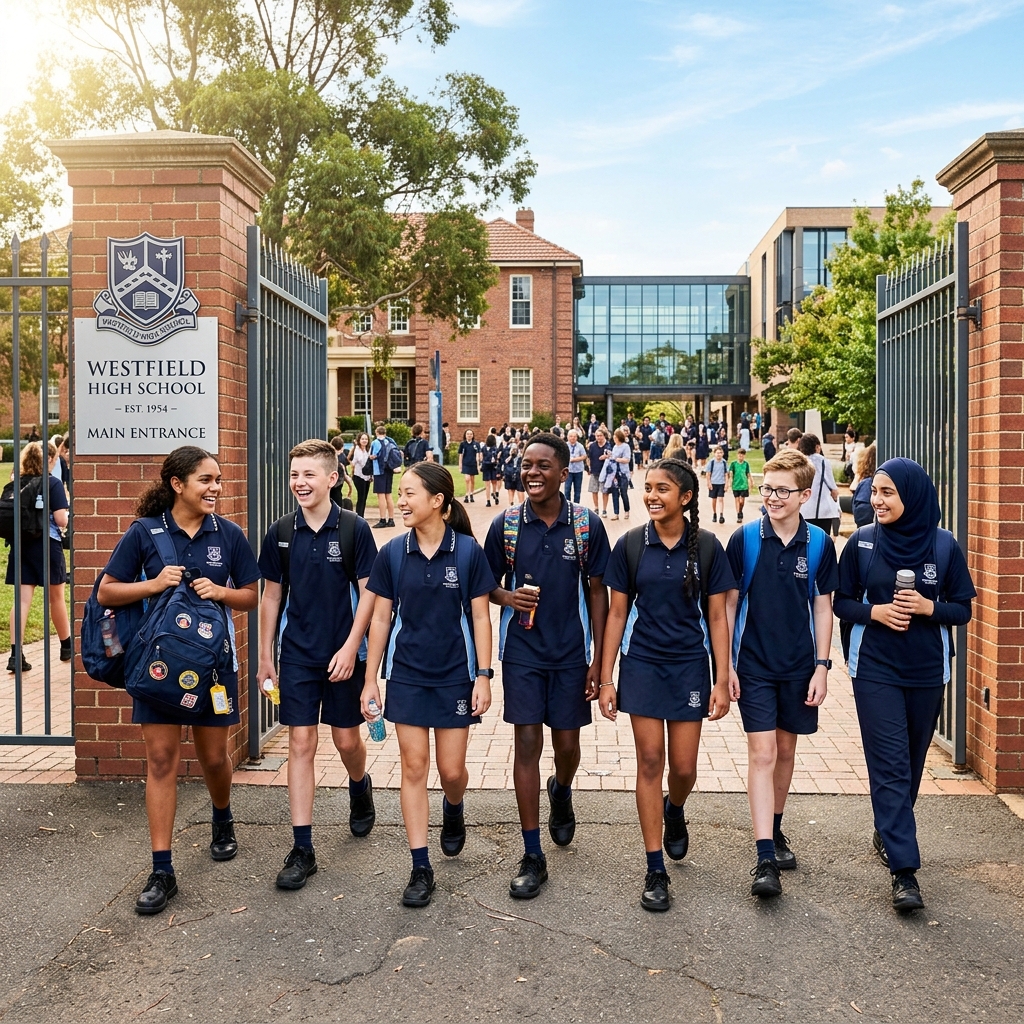
Every year around April, thousands of NSW parents receive a thin envelope containing their child's selective high school placement result. In households across Sydney, that envelope has the power to change dinner table conversations for months. I have spoken with parents who described receiving a placement at James Ruse Agricultural High School as a moment more emotionally intense than their own university acceptance. I have also spoken with parents who described their child's rejection as a moment of quiet relief.
NSW's selective high school system is one of the most distinctive — and most argued-about — features of Australian public education. Here is an honest account of how it works, what it does well, and what it doesn't.
The basics
NSW has 19 fully selective government high schools, where every student is admitted on the basis of academic merit. It also has around 30 partially selective schools, which offer one or more academically selective streams alongside mainstream classes.
Entry to Year 7 in a fully selective school is determined through the Selective High School Placement Test, which is held in March each year for students currently in Year 5. The test has four components: reading, mathematical reasoning, thinking skills, and writing. Students also submit their Year 5 school rankings (basically their teacher's assessment of their academic standing relative to their class).
Each student's final score is a combination of test results (approximately 70%) and school ranking (approximately 30%). Scores are used to create a ranked list for each selective school, and students are offered placement working down that list until all places are filled.
The coaching ecosystem
The most controversial aspect of selective school preparation in NSW is the scale of the selective school coaching industry. In suburbs like Chatswood, Strathfield, Hurstville, and Parramatta, tutoring centres specifically focused on selective school test preparation operate from 7am on Saturdays with queues of students waiting for their session. Some centres charge $80–$150 per hour; intensive weekend programs before the test can cost $4,000–$8,000.
The honest answer to "Does coaching work?" is: it does improve test performance, typically by something in the range of 5–15 percentile points for students who weren't already at the ceiling. But whether it improves it enough to change a marginal student's placement outcome is much harder to establish — and whether a student who needs $8,000 of coaching to achieve a selective school score will thrive once they get there is a genuinely important question.
The research on this suggests: students who achieve selective school entry significantly through coaching, without the underlying academic foundation and intrinsic motivation it develops, are more likely to experience anxiety and underperformance in Year 7 and 8. The schools themselves are aware of this.
Which schools are "the best"?
James Ruse Agricultural High School in Carlingford has topped NAPLAN and HSC performance tables for decades and is consistently ranked among the highest-performing schools in the country. Other fully selective schools with strong academic reputations include Sydney Boys High, Sydney Girls High, North Sydney Boys, North Sydney Girls, Hornsby Girls, Baulkham Hills, and Penrith (which specialises partly in mathematics).
But "best" is context-dependent. These schools perform extraordinarily well in raw academic terms. They also sit within demanding peer cultures that are genuinely wonderful for some students and genuinely difficult for others. A student who is academic but also deeply creative, or who values a broad co-curricular life, or who finds relentless academic competition stressful, may genuinely thrive more at a strong comprehensive high school than at a selective school where they are solidly in the middle of the cohort.
Partially selective schools: a middle path
Partially selective schools — which include some very strong schools like Fort Street, Caringbah, and Girraween — offer a selective stream alongside mainstream classes. This creates a more socially diverse environment than fully selective schools, while still providing access to an academically able peer group for students in the selective stream. For many families, this is the option that makes the most sense.
Is selective school right for your child, specifically?
Here are the questions I'd think hard about before investing two years of Saturday mornings in selective school preparation:
- Does your child actually want to go to a selective school? Not "would they like the idea of it" — do they, with genuine self-awareness, want the kind of academically intense environment these schools create?
- Are they intrinsically motivated academically, or are they externally driven (by parental ambition, by a competitive peer group)? The former flourishes at selective schools; the latter sometimes struggles badly.
- What is the alternative? A high-quality comprehensive school in your area may deliver a genuinely excellent education that also develops social breadth, leadership, and community connection that selective schools sometimes struggle to foster.
The selective school system is, for the right student, a remarkable educational environment. It is also, for the wrong student, five years of feeling like you're swimming upstream in your own school. Knowing which your child is — before the envelope arrives — is the real preparation.